- Uncontrolled indoor humidity damages paint finishes, ceilings, steel frames, and electrical panels.
- Standard exhaust fans waste heated air without regulating moisture condensation accurately.
- Dedicated pool dehumidifiers maintain optimal indoor relative humidity between 50% and 60%.
Indoor swimming pools grant total family privacy and year-round swim access regardless of outdoor weather, yet they require completely different environmental engineering compared to open-air backyard pools.
The single biggest risk inside an enclosed pool hall is persistent water evaporation—ignoring vapor dynamics inevitably causes structural deterioration and unhealthy air.
01.Why Does Humidity Spike in Indoor Pool Rooms?
- Continuous surface water evaporation taking place 24 hours a day.
- Temperature differentials between heated pool water, hall air, and exterior glazing.
- Inadequate air exchange and stagnant vapor pockets inside closed enclosures.
- Active pool water heating, which accelerates evaporation rates dramatically in cooler seasons.
02.Structural & Health Hazards of Uncontrolled Moisture
- Heavy water condensation on walls, gypsum ceilings, and panoramic glass facades.
- Blistering paintwork, warping woodwork, and ruined luxury interior finishes.
- Accelerated corrosion and rusting of structural metal fasteners and hardware.
- Short circuits and premature failure of lighting fixtures and electrical controls.
- Mold proliferation, musty odors, and uncomfortable respiratory air quality.
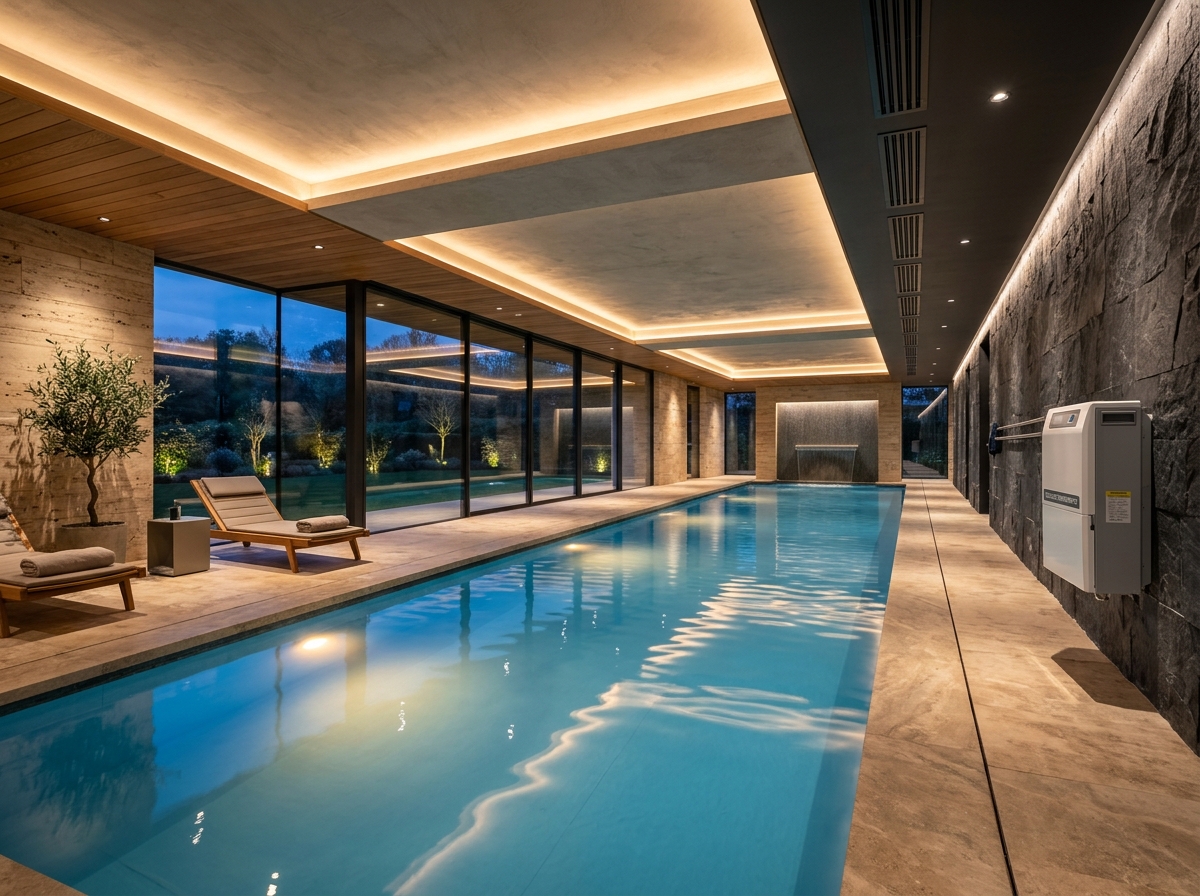
03.Why Standard Exhaust Fans Are Never Enough
A standard exhaust fan treats stagnant air superficially rather than regulating moisture saturation. Continuously venting room air outdoors also discards expensive thermal energy while pulling in unconditioned, dusty outside air.
04.How a Dedicated Pool Dehumidification System Works
A specialized swimming pool dehumidifier runs a closed-loop three-stage thermodynamic cycle:
- 1Draws moisture-laden air quietly from the pool hall enclosure.
- 2Passes air over an evaporator coil to condense suspended vapor into safe condensate drain.
- 3Re-warms and returns dry, comfortable air to sustain relative humidity between 50% and 60%.
| Feature | Basic Exhaust Fan | Dedicated Dehumidifier |
|---|---|---|
| Humidity Precision | Weak & unregulated | Exact automated control (50%–60%) |
| Building Protection | Minimal against condensation | High structural & finish safeguarding |
| Swimmer Comfort | Drafty & clammy | Balanced, comfortable indoor climate |
| Climate & Energy | Unstable with heat loss | Highly stable with heat recovery |
Engineering Conclusion
A successful indoor pool requires an integrated micro-climate: smart dehumidification, balanced air circulation, efficient water heating, and low-odor sanitization such as mineral ionization.
Designing an Indoor Pool for Your Villa or Health Club?
Request an integrated indoor climate and pool engineering study from My Pools to protect your building shell.